
When a yard won’t drain, homeowners usually land on one of two answers they’ve heard from a neighbor or a search bar: put in a French drain, or regrade the yard. Both work. But they solve different problems, and installing the wrong one is how people spend money without fixing the puddle.
Here’s how we decide between them on real Southwest Michigan properties — and why the best fix is sometimes a little of each.
First, figure out where the water actually is
Drainage problems come in two flavors, and the cure depends on which one you have.
- Surface water sits on top of the ground. It sheets across the lawn during a storm, collects in low spots, and lingers in puddles after the rain stops.
- Subsurface water moves through the soil. It saturates the ground from below, keeps an area spongy long after the surface looks dry, and is the type that finds basement walls.
Watch your yard during the next good rain. Where does the water come from, where does it pool, and how long does it stay? That single observation tells us more than any guess.
What yard grading does
Grading reshapes the surface of your land so gravity carries water where you want it. The guiding rule is simple: the ground should slope away from your house — generally about six inches of fall over the first ten feet.
Regrading is usually the right call when:
- Water runs across the surface of the yard rather than welling up from below.
- The ground slopes toward the house instead of away from it.
- You have low spots that collect runoff after every storm.
Done correctly, grading is the most durable drainage fix there is, because it works with gravity instead of fighting it. There’s no pipe to clog and nothing to maintain — just a properly shaped surface moving water the way it should.
What a French drain does
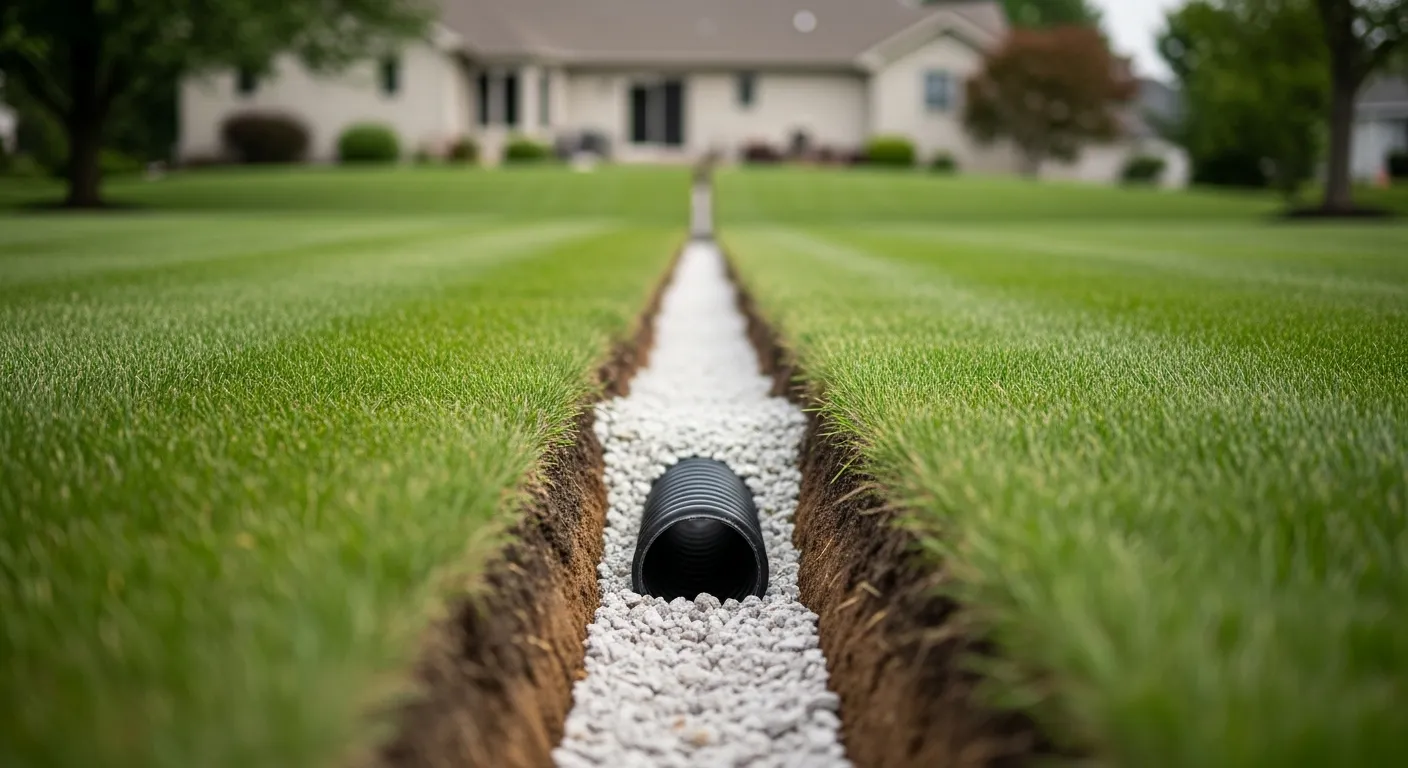
A French drain is a gravel-filled trench with a perforated pipe at the bottom. Water seeps down through the gravel, enters the pipe, and gets carried off to a safe outlet. It’s a subsurface tool — it intercepts water moving through the soil.
Typical residential specs look like this:
- Depth: 12–18 inches for collecting surface water; 18–24 inches when intercepting groundwater near a foundation.
- Width: about 12 inches for a standard residential run.
- Gravel: at least two inches over the top of the pipe, often filled to within four to six inches of the surface for better intake.
- Fabric: the pipe is usually wrapped in landscape fabric so soil doesn’t clog the perforations over time.
A French drain earns its keep when:
- Water is trapped underground and keeps an area soggy.
- You’re protecting a foundation from saturated soil.
- A persistent wet zone won’t drain no matter how the surface is shaped.
Side by side
| Yard grading | French drain | |
|---|---|---|
| Targets | Surface water | Subsurface water |
| How it works | Reshapes slope, uses gravity | Intercepts and pipes water away |
| Maintenance | Essentially none | Periodic; can clog if built poorly |
| Best for | Runoff, low spots, slope toward house | Saturated ground, foundation protection |
Why the best answer is often “both”
Plenty of properties have both problems — water sheeting toward the house and a chronically saturated low corner. On those sites, the smartest fix combines the two: we regrade to push surface water away from the structure, then place a French drain at the lowest point to handle whatever the slope can’t.
That two-part approach covers surface and subsurface water at the same time, which is why a single-tool fix sometimes disappoints. The yard isn’t one problem; it’s two, and it needs the matching solution for each.
This is also where a contractor who actually reads the site earns the call. Anybody can dig a trench. Knowing whether the trench is even the right move — that’s the part that saves you money.
Frequently asked questions
Will a French drain work in heavy clay soil?
Yes, with the right grading and materials. Clay drains slowly, so the trench has to be built with proper fall and enough gravel to keep water moving toward the outlet. Poorly built drains in clay are exactly the ones that fail.
How long does a French drain last?
A well-built drain — clean gravel, wrapped pipe, correct slope — can perform for decades. The ones that clog early were usually undersized or skipped the fabric.
Can grading alone fix a wet basement?
Often it’s the first and most important step. Pulling surface water away from the foundation solves a surprising number of “wet basement” calls before any drain goes in the ground.
How do I know which one I need?
Watch the water during a rain, then have someone look at the site. We’ll tell you straight whether you need grading, a drain, or both — and we won’t sell you a trench you don’t need.
Stop guessing at your standing water
If a stubborn wet spot keeps coming back, the fix starts with reading the site correctly. Send us the details or call (269) 230-1777, and we’ll figure out where your water is really coming from — and put the right solution in the ground the first time.
Sources: D&L Landscape — French Drains vs Grading, Projul French Drain & Yard Drainage Guide.