
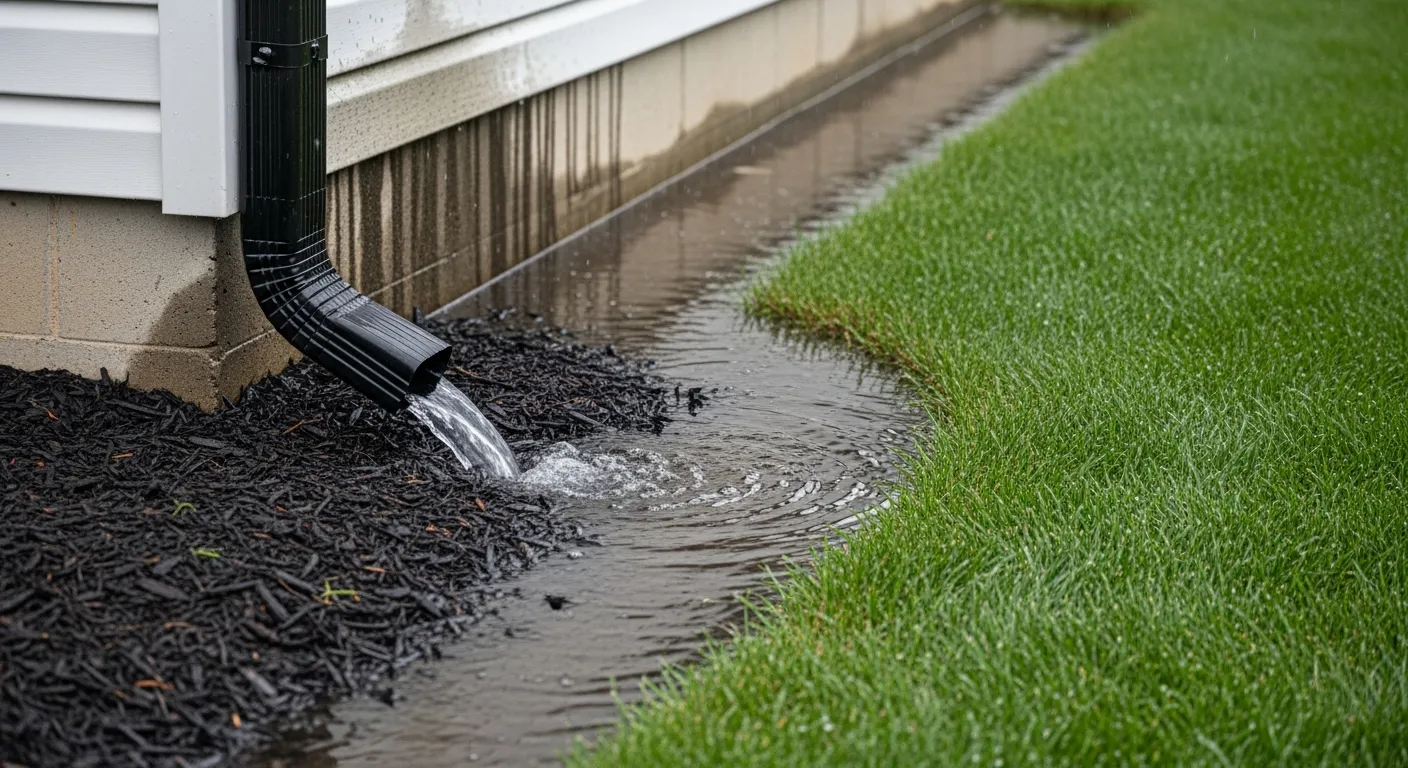
Drainage problems rarely start with a flood. They start small — a spot that stays wet a little too long, a basement that smells faintly of damp, mulch that keeps washing out of the bed. Caught early, these are easy and inexpensive to fix. Ignored, they turn into foundation damage and wet basements that cost real money.
Here are seven signs your yard isn’t draining the way it should, and what each one means.
1. Standing water that lingers after rain
The obvious one, but worth stating: if puddles sit on your lawn for hours or days after a storm, water has nowhere to go. Either the ground slopes the wrong way or a low spot is trapping runoff. A yard that drains well sheds surface water within a reasonable time — lingering water is a grading problem talking.
2. Water pooling against your foundation
This is the one to take seriously. Water collecting along the base of your house is the direct path to a wet basement, cracked foundation walls, and structural trouble. The ground should slope away from the house — about six inches of drop over the first ten feet. Water heading toward the foundation needs correcting before it gets inside.
3. A soggy spot that never fully dries
If one area of the lawn stays spongy for days while everywhere else dries out, you’re likely dealing with subsurface water — water trapped in the soil rather than sitting on top. That’s the classic case for a French drain to intercept the water underground and carry it away.
4. A damp or musty basement
Basement moisture is often a yard problem in disguise. When the ground around your foundation can’t move water away, that water works through the walls and floor. A persistent damp smell, efflorescence on the walls, or seasonal seepage frequently traces back to grading and drainage outside.
5. Eroding soil and washed-out mulch
When water moves across your yard too fast or in the wrong places, it carries soil with it. Channels cutting through the lawn, mulch that keeps relocating, and exposed roots all mean runoff is concentrating where it shouldn’t. The water needs to be slowed and redirected.
6. Foundation cracks and settling
Soil that’s constantly wet, then dry, then wet again — especially the clay common around Kalamazoo — swells and shrinks with the moisture. That movement stresses foundations and can cause cracking and settling over time. Controlling the water around the house keeps the soil more stable.
7. Patchy, struggling, or mossy lawn
Grass doesn’t thrive with wet feet. If patches of your lawn stay thin, yellow, or turn to moss while the rest does fine, chronically saturated soil is a likely cause. Moss in particular loves the damp, compacted, poorly drained ground that signals a drainage issue underneath.
What to do about it
The right fix depends on which signs you’re seeing — and that’s the whole point of paying attention to them.
- Surface water, slope toward the house, low spots → regrading to move water away with gravity.
- A persistent soggy zone or foundation protection → a French drain to intercept subsurface water.
- Specific pooling points that can’t be graded out → a catch basin and yard drain to collect and pipe water to a safe outlet.
- Several signs at once → usually a combination, because most real yards have both surface and subsurface water to deal with.
The common mistake is throwing a single fix at a multi-part problem — dumping topsoil in a low spot, or trenching a drain where grading was the real issue. Reading the signs first is what points to the solution that actually holds.
Frequently asked questions
How urgent is water against my foundation?
It’s the one we’d address first. Water pooling at the foundation is the leading path to a wet basement and structural damage. The sooner it’s redirected, the cheaper the fix.
Can drainage problems really damage my foundation?
Yes. Constantly saturated soil — especially our regional clay — swells and shrinks, and that movement plus hydrostatic pressure against the walls can crack and settle a foundation over time.
I only see one sign. Should I still get it checked?
Early is exactly when these are cheapest to fix. One small sign now is a lot easier to address than the foundation repair it can become later.
How do you figure out the cause?
We read the site — ideally during or right after a rain — to see where water comes from, where it goes, and how long it stays. That tells us whether you need grading, a drain, or both.
Catch it before it costs you
If any of these signs sound like your yard, the time to act is now, while it’s still a small fix. Tell us what you’re seeing or call (269) 230-1777, and we’ll get to the bottom of where your water is going — and put it where it belongs.
Sources: Projul French Drain & Yard Drainage Guide, D&L Landscape — French Drains vs Grading.